


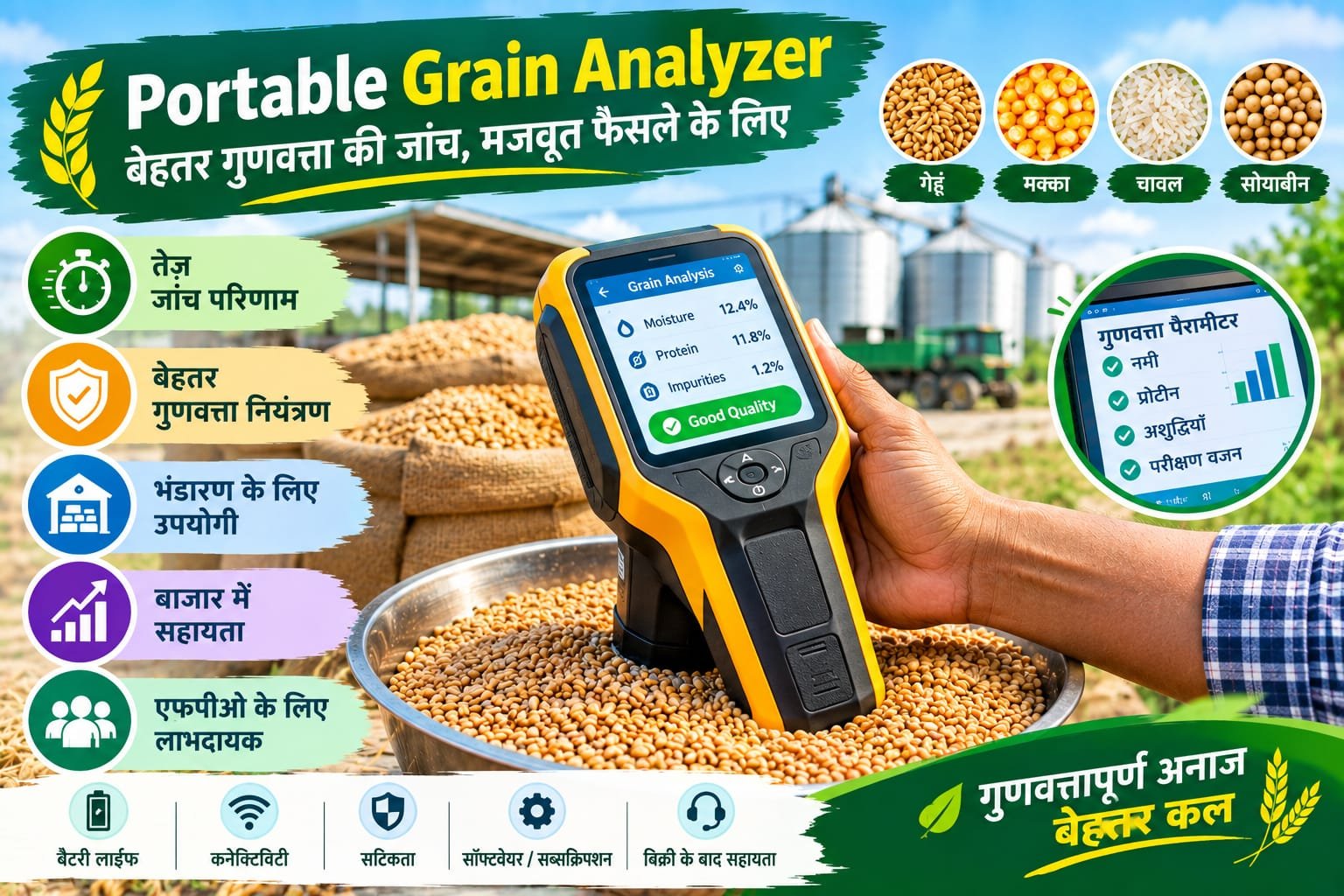
What Is a Portable Grain Analyzer?
A Portable Grain Analyzer is a digital device designed to provide information about selected grain-quality parameters. Depending on the model and technology, it may help assess characteristics related to grain quality, supporting faster decision-making during storage, grading and marketing.
Why Is Grain Quality Testing Important?
Good-quality grain can be important for farmers, FPOs, traders, warehouses and food processors. Quick access to quality information may help users make more informed decisions about grading, storage and market handling.
Key Benefits
Quick assessment: Digital systems may provide readings faster than some conventional testing processes.
Better quality management: Information can support sorting and grading decisions.
Useful for storage: Quality data can help users monitor grain before and during storage.
Marketing support: Testing information may assist negotiations where quality parameters are relevant.
Useful for FPOs: Farmer groups can potentially share the equipment and reduce individual investment.
What Should Farmers Check Before Buying?
Farmers should check the parameters measured, accuracy specifications, calibration requirements, battery life, operating conditions, software charges and after-sales service. Different devices may provide different types of readings.
A digital reading should not automatically be treated as a final laboratory result. Proper calibration and correct operating procedures are essential for reliable measurements.
Conclusion
Portable grain analyzers can support modern post-harvest management by making quality information more accessible. For individual farmers, FPOs and grain businesses, the usefulness depends on crop type, testing requirements and local marketing practices.


