


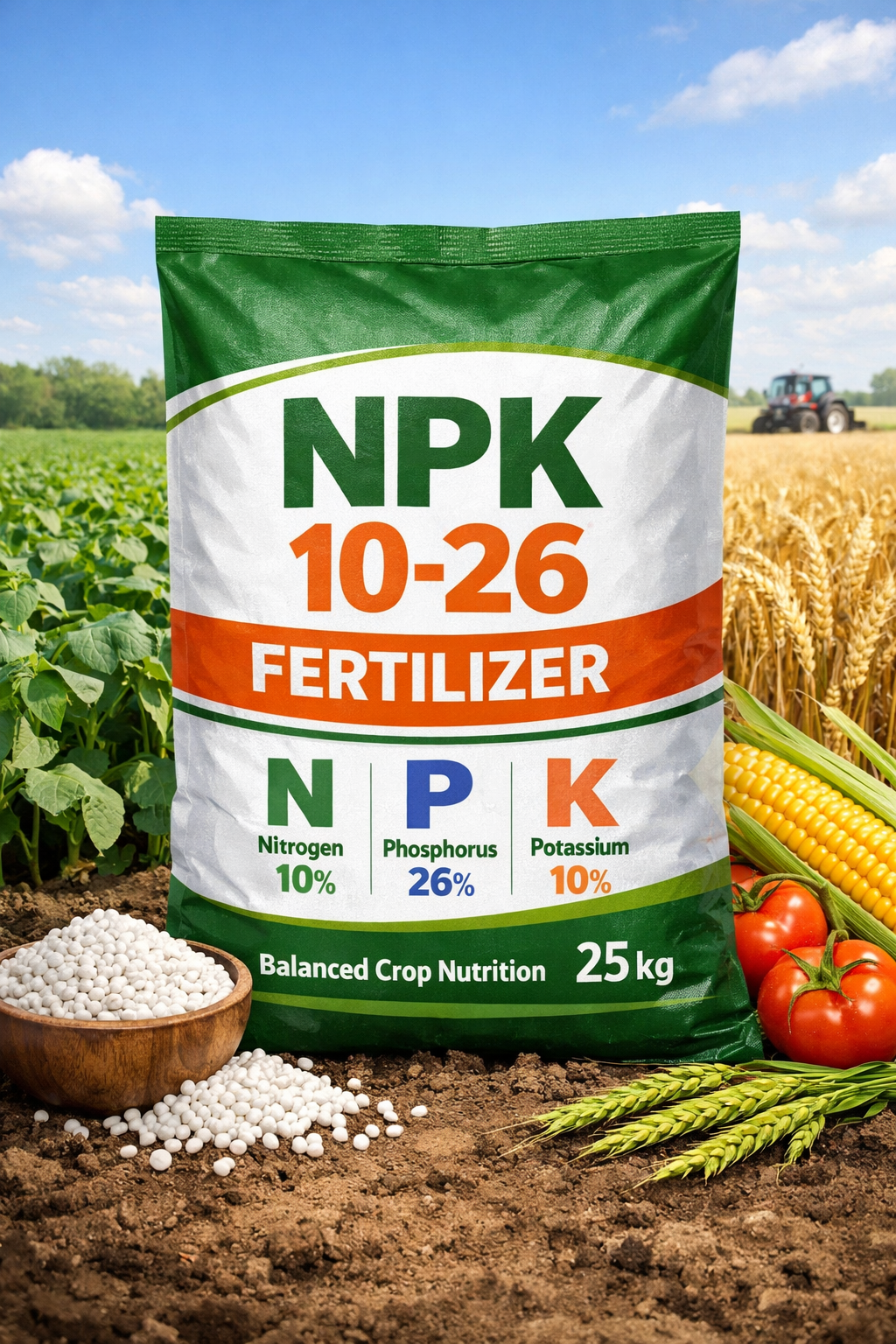
NPK 10–26 refers to a fertilizer formulation that is high in phosphorus, commonly used to support root development and early plant growth.
What the numbers mean
• 10% Nitrogen (N):
Supports vegetative growth, leaf development, and overall plant vigor.
• 26% Phosphorus (P₂O₅):
Very important for root formation, seedling establishment, flowering, and fruit development.
• Potassium (K):
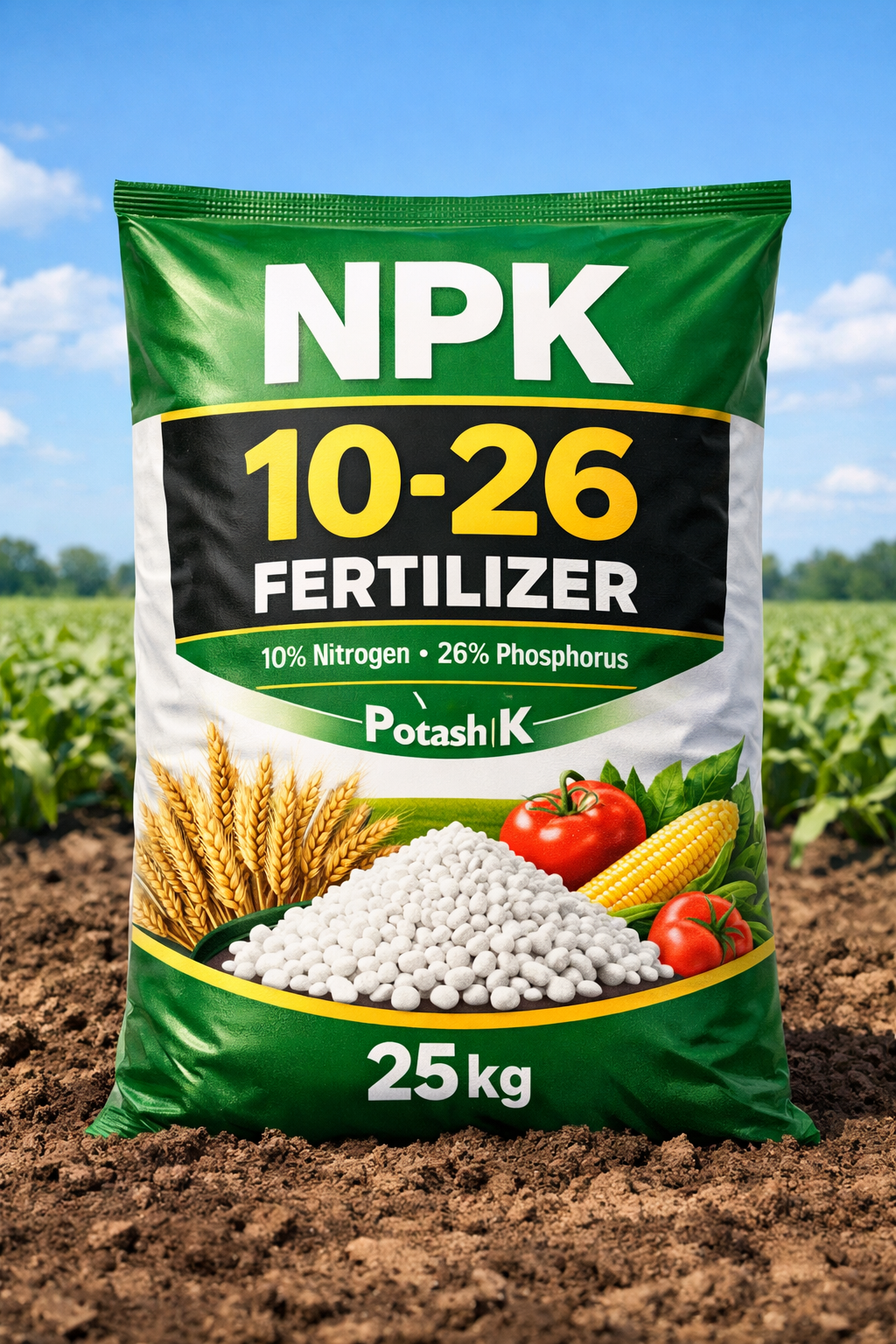
The potassium value depends on the full grade. In the market, this is most often found as:
o NPK 10–26–26 (with 26% K₂O), or
o Sometimes as NPK 10–26–10 or other variants.
If only “10–26” is mentioned, it usually emphasizes nitrogen and phosphorus, with potassium being either lower or specified separately.
Key benefits
• Promotes strong root systems
• Enhances early crop establishment
• Improves flowering and yield potential
• Helps plants withstand stress during early growth
Common uses
• Basal or starter fertilizer
• Suitable for cereals, oilseeds, pulses, vegetables, and fruit crops
• Especially effective in phosphorus-deficient soils
• Widely used at sowing or transplanting stage
Application
• Applied to soil before or at planting
• Can be blended with other fertilizers to meet crop-specific nutrient needs


